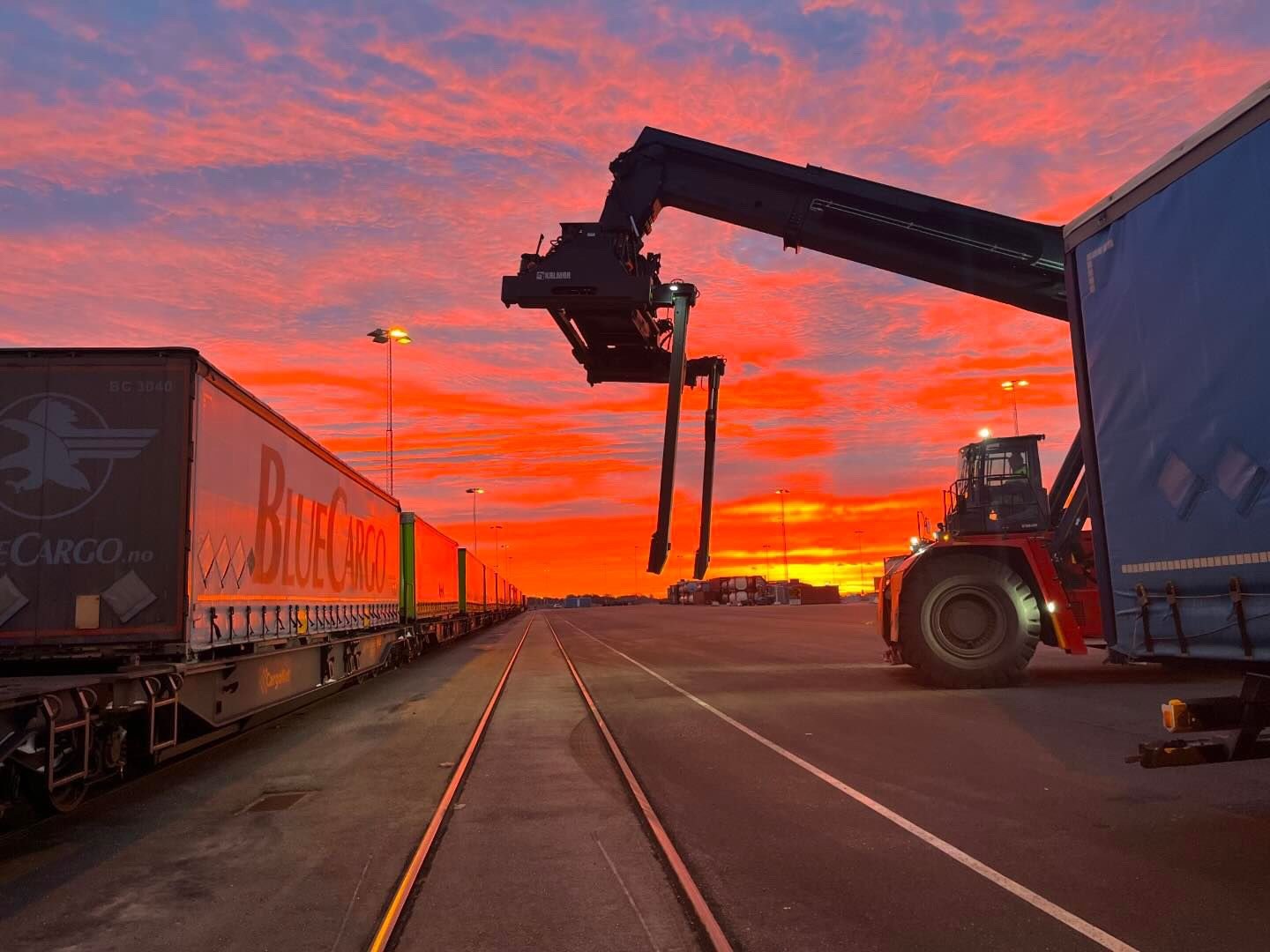
Photo: TT-Line
On 27 August, TT-Line convened more than one hundred leaders at Maryhill Estate — ferry and short-sea operators, rail undertakings, road hauliers, ports, forwarders and infrastructure owners from across the Nordics, the Baltic and Europe. Their input was captured live, from the whole room. The themes that surfaced were not about technology. They were about coordination: interfaces for partnership that no single actor owns, the ability to access the right data at the right time in the right form, transparency across parties, shared standards — and one commercial anchor: making intermodal transport more competitive.
Read as a list, these are familiar conference themes. Read together, they are a specification — and what they specify, without using the term, is federated data sharing. The article traces why no centralised platform has met the ask, why European regulation is converging on the same requirement, and why the scarce asset in the coming corridor economy is not data access but the trusted, shared operational context in which access means something.
For Nomon, the significance is the direction of the argument. The infrastructure side — researchers, public bodies, the communities building trusted data infrastructures — has made this case for years. In August, on the record, the market made it back.
Read the full article in The Maritime Executive →Shad Blidberg Hallam is Founder & Executive Lead of Nomon AB. Co-authored with Mikael Lind, Senior Strategic Research Advisor at RISE and (Adjunct) Professor in Maritime Informatics at Chalmers, and Wolfgang Lehmacher, global supply chain expert and former World Economic Forum director.
INTERMODAL · BALTIC CORRIDOR · FEDERATED DATA SHARING · VIRTUAL WATCH TOWER · TRANSPORT SYSTEMS