The Nordic–Baltic transport system is under simultaneous structural pressure: rail modernisation programmes running at national pace, EU regulatory harmonisation arriving at European pace, an energy transition that rewires cost structures, geopolitically driven logistics demands layered onto civilian networks, and capacity friction at nearly every port–rail–road interface.
Each force is manageable on its own. Together, they do something more fundamental: they change the unit of competition.
Cargo owners do not buy a rail leg, a port call, or a terminal lift. They buy an outcome across a chain: arrival, reliability, cost, and increasingly a defensible emissions number. Competitiveness has migrated from the entity to the corridor, and value now accrues to whoever controls flows, customer relationships, and critical nodes.
This is the diagnostic most strategy work misses. An operator fighting margin erosion looks inward, at cost programmes, pricing, and fleet plans, while the losses are being generated at the interfaces: the port window missed because the rail slot moved, the capacity bought twice because no one shares a plan, the customer lost because the chain could not commit to what any single link could deliver.
Five risks compound if the region does not act. Fragmentation: each operator optimising its own asset base, collectively suboptimising the corridor. Divergent incentives: infrastructure managers, operators, ports, and terminals measured on different things. Uncoordinated capital: parallel national investments that never quite connect. Data opacity: no shared view of planned versus actual across the chain. And geopolitical load: civil and military capacity demands now sit on the same networks.
There is a sixth risk, rarely named: integration by default. If the region does not integrate deliberately, integration happens anyway, done to it by whichever actor moves first and sets terms.
Integration is not full-chain ownership; no actor can or should own the Baltic corridor. It is not a single dominant platform. And it is not waiting for harmonisation from Brussels to resolve what is, at root, an operating problem.
Integration is selective control of critical nodes and flows. Shared governance models with cross-entity KPI alignment. Corridor-based capacity logic, so investment connects instead of duplicating. And federated data transparency, with each actor’s sovereignty preserved. Public-good infrastructure of the kind the Virtual Watch Tower community is building shows the pattern.
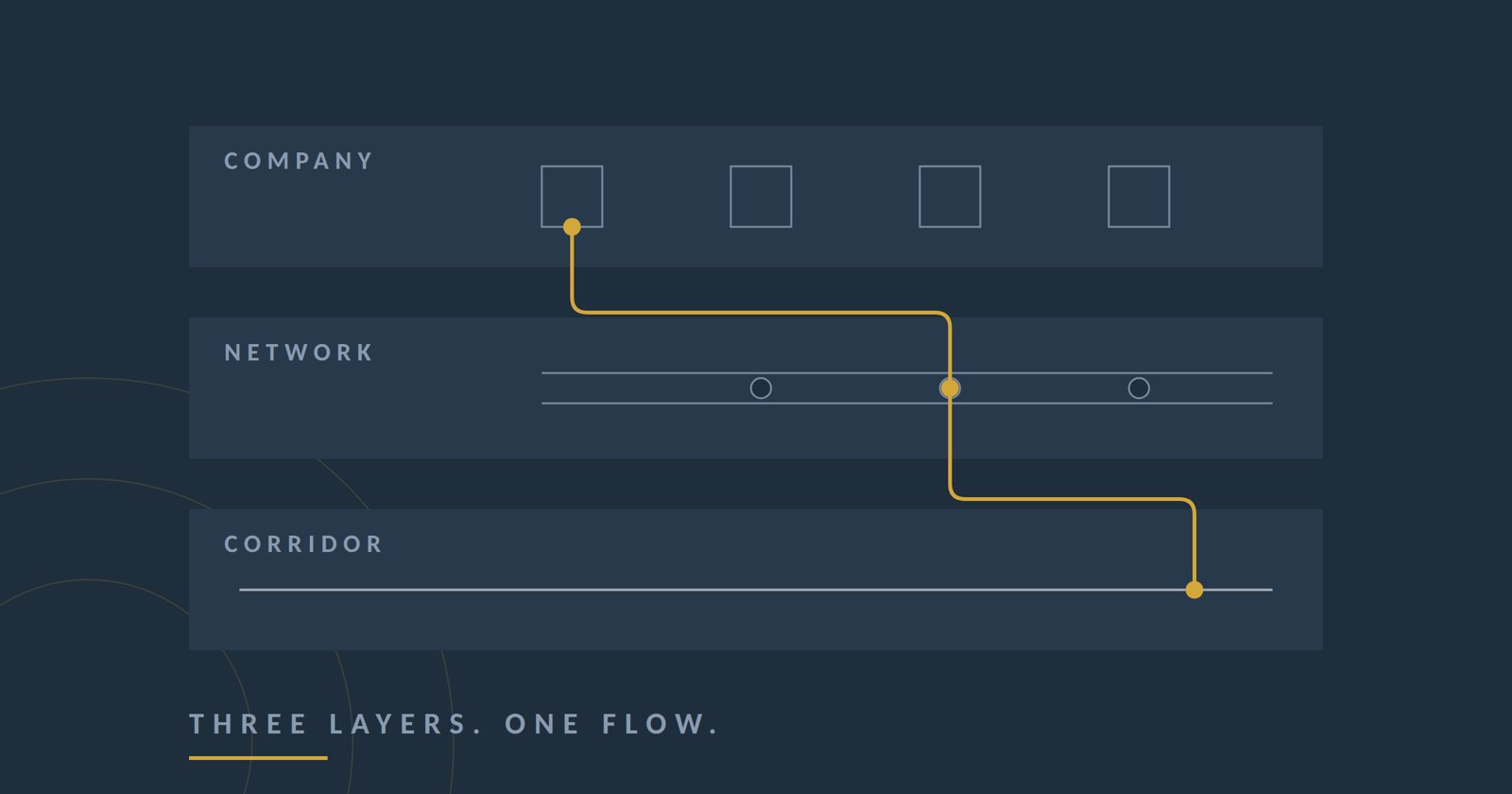
For first movers, the same forces read as advantage: reliability becomes a sellable product, chain-level emissions data becomes commercial ammunition, capacity coordination becomes resilience. The pattern runs through three layers at once: company performance, network architecture, regional corridor integration. Skip a layer and the advantage leaks.
Stability precedes expansion. Governance precedes capital deployment. Alignment precedes digitalisation. The constraint is not ambition. It is coordination and execution.