Global supply chains have undergone a digital revolution over the past two decades. Platforms, data providers, and analytics tools have transformed how companies plan, track, and manage logistics. Yet despite this progress, one structural problem remains largely unsolved: true end-to-end visibility across supply chains is still fragmented.
Operational data exists everywhere: within shipping lines, terminals, freight forwarders, cargo owners, and logistics providers. But this data rarely converges into a shared operational picture across organisations. Each actor sees part of the system; few see the whole. Disruptions ripple through networks before they are fully understood, decisions are made with incomplete information, and opportunities for coordination are missed.
Improving this requires more than another dashboard or software platform. It requires a new layer of digital infrastructure that enables trusted collaboration across supply chains. This is the ambition behind the Virtual Watch Tower (VWT) initiative, and why Nomon has joined the VWT Community.
Visibility tools provide value, but they operate within organisational boundaries. What is missing is direct operational data shared between the participants that actually move goods across the transport chain. Without that foundation, visibility remains partial, predictive models become less reliable, and coordination during disruption is slow and reactive. The deeper challenge is not visibility. It is collective operational intelligence.
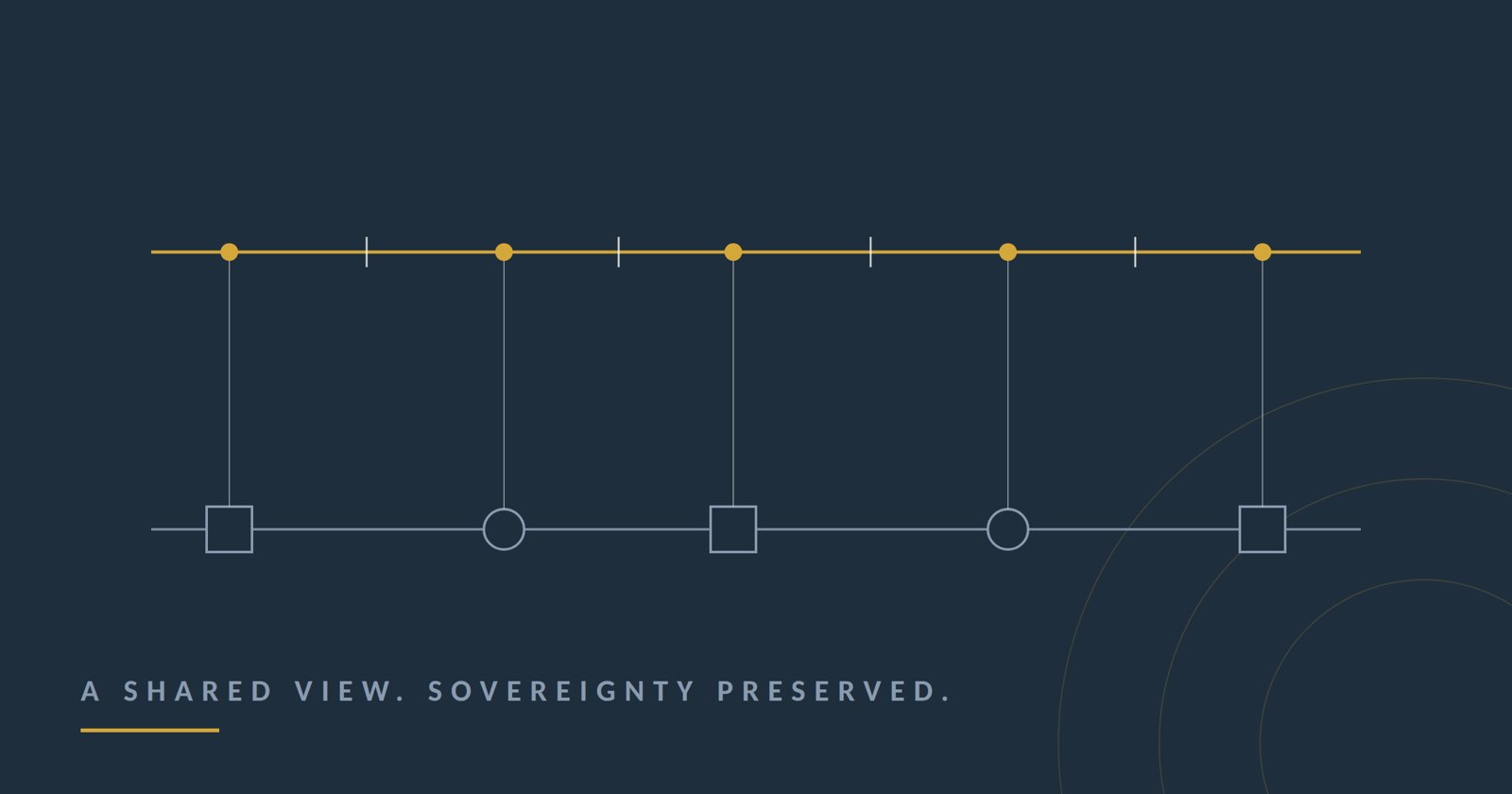
Rather than building another centralised platform, the initiative creates a distributed ecosystem for trusted data sharing, shipper-driven and terminal-centric. A network of interconnected “watch towers”, each operated by a participating organisation, contributes selected operational data along the transport chain. Together they form a federated network of supply chain intelligence.
The aim is not to replace existing systems but to complement them: sharing operational signals where collaboration creates value, especially when disruptions occur or coordination across transport legs becomes critical.
Shared digital infrastructure in logistics must meet three requirements. It must respect data sovereignty: companies retain control over what they share and under what conditions. It must support interoperability across thousands of organisations using different technologies. And it must be trusted and neutral: collaborative infrastructure only works when participants believe it benefits the ecosystem.
Three principles. Supply chain resilience requires shared awareness: disruptions propagate through networks, and responding requires situational awareness across them. Trusted data exchange is a strategic capability, built from governance models and industry collaboration rather than technology alone. And ecosystems drive innovation: the most important advances emerge when industry, technology providers, and research institutions work together.
The next chapter in supply chain digitalisation will not be defined by individual tools. It will be defined by how effectively organisations connect their systems, share trusted signals, and coordinate decisions across networks. The Virtual Watch Tower initiative is one of the most promising efforts to build that model.